Interview with dr. J. McCormack-Venhorst
Dr. Jennifer McCormack-Venhorst is biomedisch onderzoeker bij TNODr Jennifer McCormack-Venhorst is a biomedical researcher at TNO. She works with large amounts of (bio)medical data to gain a better understanding of how diseases work. That may sound abstract, but her work is a first step in the search for new treatments – including for connective tissue disorders.
Could you tell us a bit about your background?
“I studied chemistry at VU University Amsterdam, specialising in pharmaceuticals. I then went on to complete a PhD in molecular and computational toxicology. This involves, for example, examining how drugs work in the body and what the potential side effects are.
After completing my PhD, I worked for a pharmaceutical company for twelve years. There, I was involved in designing new medicines, often using predictive computer models. I now work at TNO, where I focus more on analysing data and literature to gain a better understanding of disease processes. What appeals to me about this is that you look at a problem from different angles: what exactly is happening in the body, why is it happening, and where can you intervene?”
So you’re not actually in the lab yourself?
“No, I mainly work on the computer. I gather information from various sources and try to piece the puzzle together. This gives us a clear picture of how a disease works and how it might be influenced. This knowledge forms the basis for developing new medicines to combat diseases and improve quality of life.
By analysing large amounts of data using computers, we can understand the possible causes of a disease much better and much more quickly. But of course, it doesn’t stop at theory. The ideas we develop in this way are then tested by others in the lab – often my colleagues at TNO. Because a hypothesis is all well and good, but ultimately you have to be able to demonstrate that it holds up in practice.”
What kind of data do you use?
“There is a wealth of relevant information available. This includes data on proteins in the body: how they are structured and how they function. It also includes information on medicines, such as which proteins in the body they affect and what side effects they may cause.
In addition, there is of course a vast amount of scientific literature, for example on the results of laboratory studies. This information comes from all sorts of sources and is often scattered across different places. What we do is bring that information together. For example, you might see a protein mentioned in one place, a particular substance in another, and a health effect in yet another. By bringing all this together, you can better understand what happens in the body and how it all fits together.”
How does artificial intelligence help with this?
“We use AI to analyse texts, for example from large databases of scientific publications. To do this, we first need to train models and combine them with our own knowledge. The AI can then automatically identify what constitutes a drug, what constitutes a protein and what constitutes an effect.
We then try to determine whether there really is a link between these things. So it’s not just that they are mentioned together, but whether they are actually related in some way – for example, whether a substance affects a particular protein and what effect that has. Here too, models are first trained for this purpose.
We organise all that information into a kind of network. It consists of lots of small connections, which together form a bigger picture. This gives you an insight into how different processes within a disease are interlinked.”
What can you do with a network like that?
“Illnesses are usually not caused by a single process in the body, but by a whole chain of events. By using a network of interconnections, you can, for example, see what happens when you change one component. What is the effect on all the other areas? In this way, you can identify points where you can influence the process. This kind of research can yield ideas for potential treatments. For liver fibrosis, for example, we have identified new targets and demonstrated in the lab that inhibiting these proteins does indeed reduce fibrosis. We also look at safety straight away: what else happens in the body when you intervene with a particular substance? Because, of course, you don’t want things to go wrong elsewhere. By mapping all this out in detail, you can speed up drug development. And by making more informed decisions about what to test and what not to test in the lab, you can also save a lot of money.”
Can you see any applications for connective tissue disorders?
“We aren’t working on that directly at the moment. However, we are exploring areas of common ground with the Power of Reflection Foundation. The methods we use are not, in themselves, tied to any one specific disease. In principle, they can be applied to all sorts of conditions, including collagen-related diseases.
What we could do, for example, is gain a better understanding of which proteins play a role in brittle bone disease and how they interact with one another. This could help us identify potential new targets for treatment. Of course, we would then always need to test this further in the lab.”
You met Cindy Wan, the chair of the Power of Reflection Foundation, at a conference. Why did you decide to develop your relationship with the foundation?
“I think it’s very important for researchers to have more contact with patients. By talking to one another, you gain a better understanding of what’s needed and where the key issues lie. That’s hugely motivating. It’s also valuable to bring together researchers from different disciplines, as the Power of Reflection foundation does. With complex conditions like these, you really need that kind of collaboration. Everyone sees things from a different perspective, and that is precisely what can lead to new insights.”
What are your hopes for the future?
“I hope that, with new technologies such as AI, we will be able to understand better and faster how diseases work and how we can tackle them. And that more attention will be paid to conditions that are currently the subject of little research. It is precisely in this area that collaboration between research institutions, drug developers and patient organisations can help us make progress.”
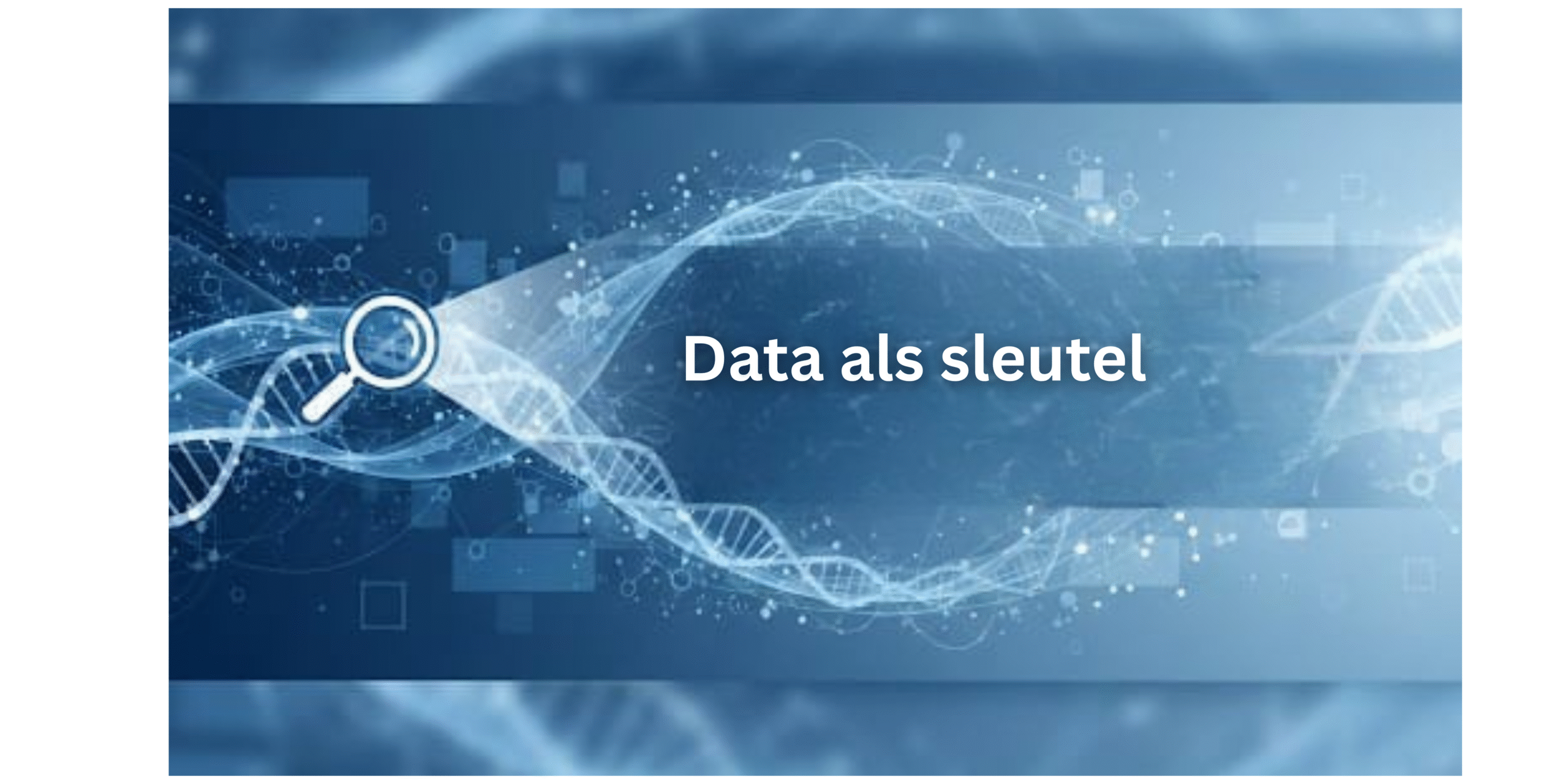
“Data as the key to new treatments “
Written by: Diana de Veld, science journalist

 English (UK)
  Nederlands