Patient representation and translational research: reflections from Barcelona
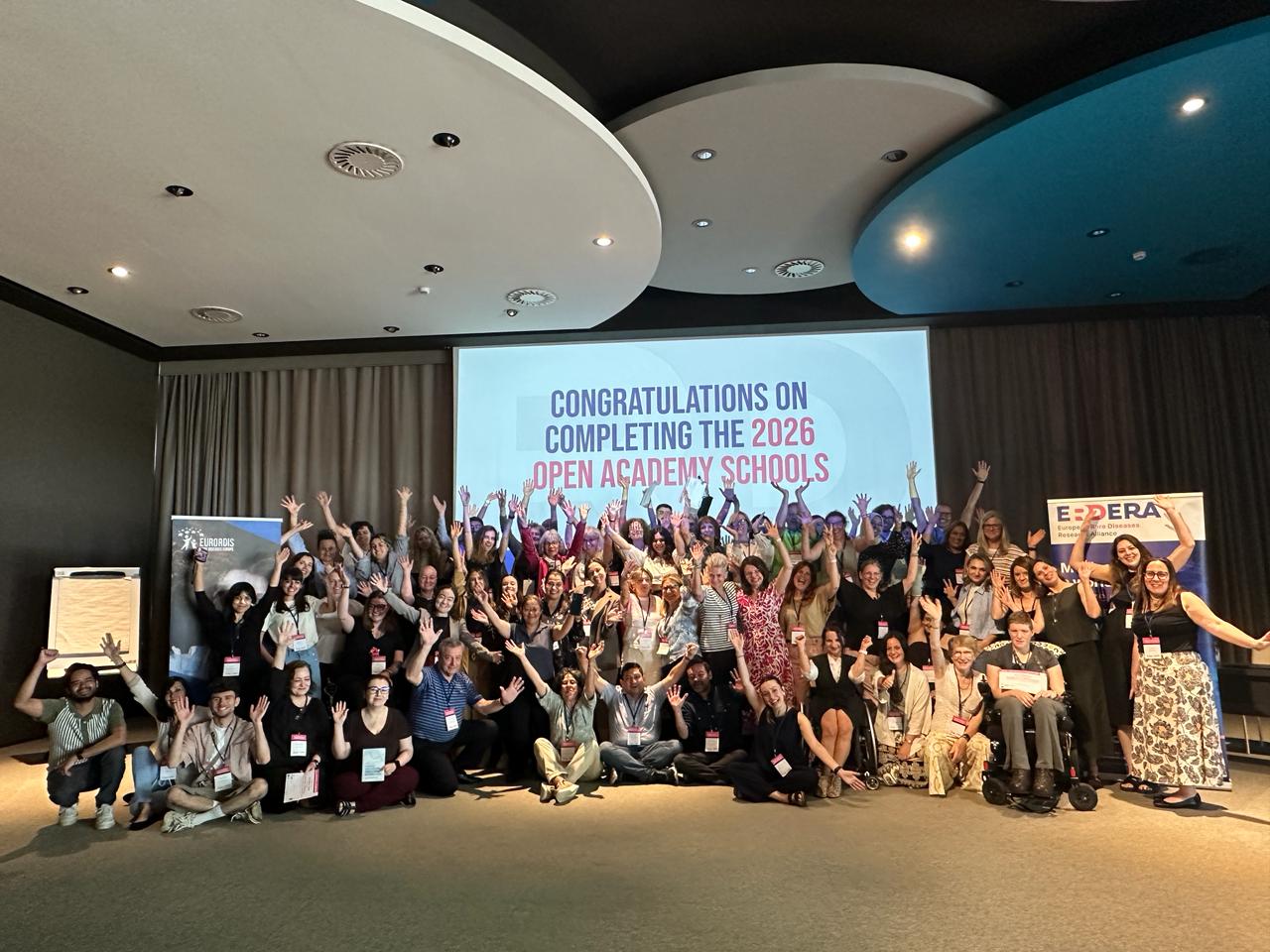
Last week, I was in Barcelona for the EURORDIS Open Academy School on Scientific Innovation & Translational Research (SITR). I participated as a representative of people living with collagen-related connective tissue disorders through Stichting Power of Reflection.
This week was not so much about isolated topics, but about a recurring movement: the way patients are increasingly being included as full partners in research.
Across the sessions, we explored a wide range of themes: genomics, rare disease registries, patient-generated data, translational research, advanced therapies, and the ethical questions surrounding innovation in healthcare. It is a lot, and yet nothing felt disconnected. Everything kept returning to the same question: how do we ensure that research ultimately reaches patients?
Throughout the week, it also became clear how rapidly the field is evolving. Patient engagement is shifting from consultation to collaboration. Data from registries and from patients themselves is becoming increasingly important in shaping research. And translational research shows ever more clearly that progress only happens when patients, clinicians, and researchers work together.
Beyond the formal programme, it was especially the conversations in between sessions that stayed with me.
With Daniel Lewi about what patient representation truly means at its core. Not just being present or having a voice, but ensuring that the broader patient community is meaningfully included in decision-making and research.
With Elliot Lilley about a question that repeatedly arises in rare diseases: how do we bridge the gap between scientific breakthroughs and treatments that actually reach patients?
And these conversations do not end with the programme itself. I will continue this dialogue with Prof. Annemieke Aartsma-Rus during a coffee meeting in the Netherlands. A good example of how collaboration often continues beyond formal settings.
In between, new connections were formed, new conversations emerged, and also new friendships. That human aspect often makes weeks like these just as meaningful as the scientific content itself.
A particularly striking moment was the visit to the Centre for Genomic Regulation (CNAG). It made very concrete how fundamental genomic research is gradually moving towards potential clinical applications. It brought the more abstract side of science very close to the reality of patients.
In short, progress in rare disease research does not happen in isolation. It happens when patients, researchers, and clinicians find each other and are willing to truly collaborate.
At Stichting Power of Reflection, we aim to strengthen the representation of people with collagen-related connective tissue disorders, ensuring that their experiences and perspectives are included from the very beginning of research, care, and innovation.
Looking ahead, this experience reinforces the importance of building sustainable bridges between patient communities and research infrastructures, so that patient perspectives are integrated from the earliest stages of scientific research.

 English (UK)
  Nederlands